
Patient-reported outcomes (PROs) are important because they provide information that cannot be captured through tests or scans alone. They reflect your experience and help guide decisions in both clinical care and research.
In Clinical Practice
PROs give you a way to share what you are experiencing so your care team can better understand how you are feeling (for example, your symptoms) and how your health affects your daily life (for example, how fatigue prevents you from doing the things you want to do). PROs help you and your care team work together to:
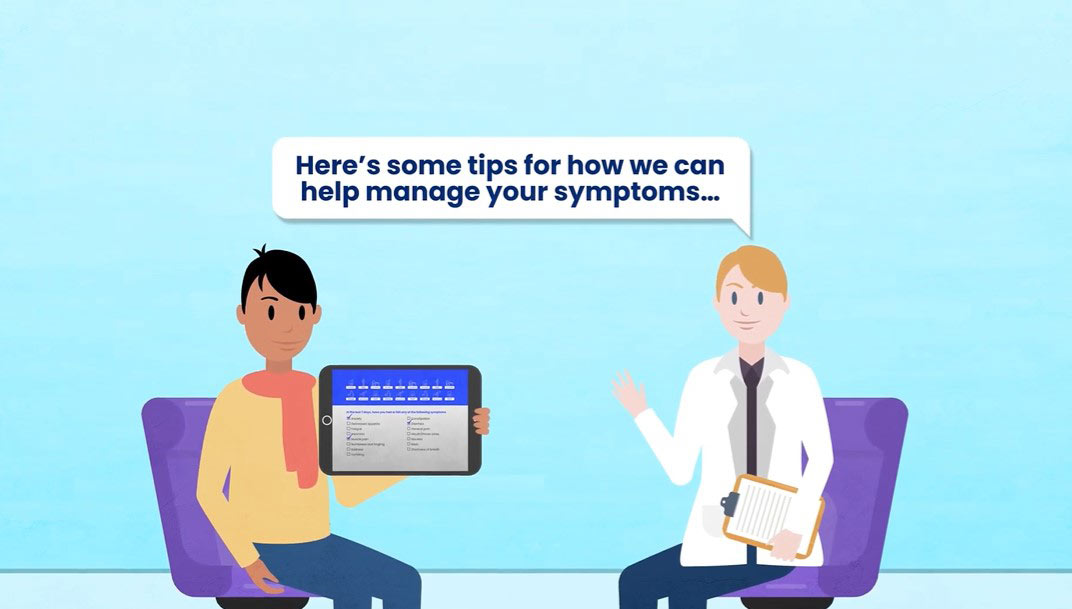
Looking at your PRO information with your care team gives you a chance to talk about what matters to you, ask questions, and make sure your concerns are addressed. When PROs are used consistently, they can lead to better symptom control, daily functioning, and quality of life.
You can view a summary of the advantages of incorporating PROs into clinical practice by clicking here.
In Research
PROs help researchers understand how new treatments impact how patients feel, the symptoms they experience, and their everyday lives. PROs provide insight into:
When you share your experience through research, you help shape better care for future patients.